
Part 2 of 4 Hidden Friction in Organisations: The Silent Killer of Growth

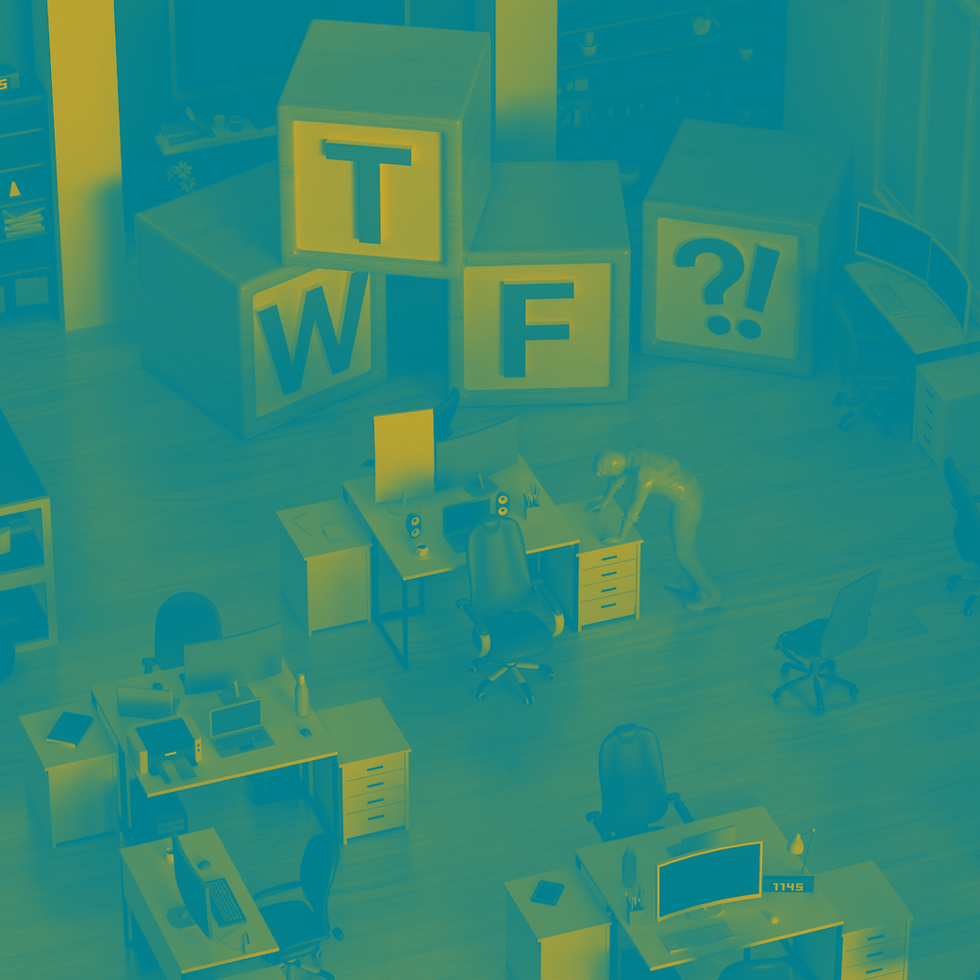
Why does everything feel harder than it should?
Not just complex. Not just busy.
But slower, heavier, more frustrating than it has any right to be.
You see it every day:
Decisions that should take hours take weeks
Work gets repeated across teams
Teams look aligned… until execution starts
Sales, marketing, finance all pull in slightly different directions
Nothing is “broken” enough to fix. But nothing works cleanly either.
This is hidden friction in organisations and it’s quietly destroying performance inside most organisations.
What is hidden friction in organisations?
Hidden friction doesn’t show up in dashboards.
It doesn’t sit neatly within one function and it rarely has a clear owner.
But it shows up everywhere in how the business actually operates:
Decisions being revisited again and again
Escalations becoming normal
Teams creating their own versions of the truth
“Alignment” meetings that don’t change behaviour
Processes that exist… but aren’t followed
Workarounds becoming the real system
Individually, these feel manageable.
Collectively, they create structural drag across the entire organisation.
The uncomfortable truth
Most organisations are not underperforming because of strategy.
They are underperforming because of how the business actually works day-to-day.
You can have:
the right strategy
the right talent
the right tools
the right investment
And still fail to execute.
Because underneath it all…the system doesn’t work as one.
This is what misalignment really looks like, when ambition and reality don’t match.
Most leaders can feel hidden friction in organisations, but struggle to pinpoint exactly where it sits or how to address it.
Why hidden friction in organisations gets ignored
Most organisations feel this friction.
They just don’t address it.
1. It’s hard to see
Friction sits between functions, not within them.
Marketing doesn’t fully see sales
Sales doesn’t fully see operations
Finance sees the numbers, not the cause
No single team owns it → so no one fixes it
2. It’s politically sensitive
Hidden friction exposes uncomfortable realities:
unclear ownership
broken decision rights
conflicting incentives
It’s easier to work around it than confront it.
3. It’s misdiagnosed
Instead of addressing root causes, organisations respond with:
more tools
more processes
more reporting
more governance
Treating symptoms, not causes
What we do instead (and why it doesn’t work)
Instead of removing friction, we build around it.
We add:
new systems
new frameworks
new transformation programmes
new reporting structures
But none of these fix the root problem.
They just make the system heavier.
That’s why:
costs increase
execution slows down
dependency on external support grows
ROI becomes harder to prove
We are investing more… to operate around problems we haven’t actually solved.

The Transformation Loop
This is where things become systemic.
Technology is evolving faster than ever.
Legacy systems are ageing faster than ever.
AI, data, SaaS, everything is accelerating.
Transformation is necessary.
But most organisations aren’t actually transforming.
They’re stuck in a loop.
The pattern looks like this:
Something isn’t working
A transformation programme is launched
Millions are invested
New tools, processes, and structures are introduced
Some improvement happens…
Then:
Friction reappears
Execution slows again
Another transformation begins
Every 2–5 years
Not because leaders are wrong. Not because teams lack capability.
Because the root cause was never properly diagnosed.
Why transformation keeps failing to stick
Most transformation programmes focus on:
what to change
systems
processes
structures
capabilities
But very few go deep enough into:
how the business actually works today
Without that:
redesign is based on assumptions
symptoms are optimised
change is layered onto misalignment
And the friction stays exactly where it was.
The uncomfortable tension
There’s also a structural reality behind this.
Transformation is:
expensive
complex
long-term
Which creates a natural bias toward: continuing transformation… not resolving it
Not intentionally but structurally.
Because if the root cause was fully understood and addressed:
transformation would be shorter
more targeted
less recurring
Instead, most organisations are: paying to manage friction, not remove it
The real cost of hidden friction
Hidden friction doesn’t just slow things down.
It creates real commercial impact.
It shows up as:
lost revenue through slow execution
margin leakage through poor pricing and governance
duplicated spend across teams
delayed launches and missed opportunities
inconsistent customer experience
reduced confidence at leadership level
And most importantly, it compounds over time.
The longer it exists, the harder it becomes to untangle.
The mindset shift most organisations need
Here’s the shift.
You don’t always need another transformation programme
You don’t always need more investment
You don’t always need to rebuild everything
Sometimes, you need to do something much simpler.
Acknowledge how the business actually works
Not how it should work.
Not how it’s designed to work.
But how it really works.
Then:
understand where friction sits
quantify its impact
identify what must change
and crucially… what doesn’t
Because not everything needs fixing.
But the critical things do.
Why this matters now
We are entering a phase where:
AI is accelerating activity
data is increasing exponentially
organisations are more interconnected than ever
If hidden friction exists:
AI will amplify it
Data will confuse it
Complexity will multiply it
Not solve it.
Final thought
Hidden friction isn’t a side issue.
It is the operating reality of most enterprises.
Until it’s understood and addressed:
transformation will keep repeating
investment will keep increasing
execution will keep slowing
Because the problem isn’t what we’re adding.
It’s how the business actually works.
Most organisations aren’t broken.
They’re just working in ways that make performance harder than it needs to be.


